Wednesday, 28 January 2015

Changing Needs of Medium-Sized Entrepreneurial Businesses

Here is  ‘Changing Needs of Medium-Sized Entrepreneurial Businesses’, my chapter from The Great British Entrepreneur's Handbook 2015:
https://www.linkedin.com/pulse/changing-needs-medium-sized-entrepreneurial-robert-craven

[The book The Great British Entrepreneur's Handbook 2015 is available free of charge on Kindle at Amazon]

The business development needs of small and large businesses seem to be catered for by coaches and big-ticket consultancies respectively. However, the market is failing to satisfy the needs of the directors of medium-sized businesses. This is a failure in terms of: 
1) not giving clients what they really want and need, and 
2) missing opportunities to deliver consultancy that adds true value to the businesses of clients.
What’s available to help the growing business is limited and inappropriate for the real needs of the client. Recent surveys and reports confirm that consulting firms and the business support industry as a whole are failing to deliver what growing entrepreneurial businesses really need.
FACT: the guru-based model of expert advice may not give the client what the client really needs.
The recent fad for guru-based, personality-based consulting firms may have now peaked. There are now many, probably too many, so-called gurus. Or at least too many people claiming to be or being accredited as gurus.
While years ago there were successful-business-folk-turned-gurus, today there are salesmen-turned-gurus. By adopting Americanised direct marketing and presentational practices, they have become predators on the ignorant and unwary. This loss of quality and the growth in quantity has been exacerbated by the recession-driven burgeoning of the coaches market: thousands of coaches offering competitively-priced (=cheap?) services to low grade companies with little growth potential.
All of this has devalued ‘guruship’, especially in the eyes of prime, middle market directors.
While accepting that the principles promoted by many gurus are well-founded and well-presented, the results achieved for most companies are not sustainable. Too many gurus offer too-good-to-be-true silver bullets.
However, it needs to be said that there are routes to success, that there are some certainties of outcome, that there are methodologies to be adopted, and strategies to be identified, which do work, and these can be implemented by many client companies.
FACT: Guru–led consultancy practices create a schizophrenic proposition
The get-rich-quick-quick, too-good-to-be-true propositions ‘work’ for those clients who are ignorant, inexperienced, desperate, or all three. However, it does not resonate with experienced business people (the middle market); they know they need help, but they don’t believe in miracles. It is no surprise then that the vast majority of guru fodder are companies that are very small (or very large).
FACT: Hard things are hard
Most business books and their authors attempt to provide recipes for challenges that have no recipes. There is rarely a recipe for a really complicated, dynamic situation. And most situations are not straightforward. The hard thing about hard things is that there is no formula for dealing with them (Horowitz, 2014).
QUESTION: Is there a middle ground? A third way?
Between the synthetic siren calls of the gurus and the laden drones of certain academics lies a sweet spot that can really appeal to experienced business people. It combines the practical methodologies of the gurus with the intelligent, analytical skills of the academics. It promises results – but neither miracles nor degrees. It is neither quick nor slow, cheap nor expensive.
FACT or OPINION?: Guru/coaching fails small businesses
Here is one version of what is going on. This is perfectly simple: guru/coaching is how-to. It isn’t where, when, how, who, how much, or with what result. It does not address the real problems most small/new businesses have. The smaller clients do not know what direction they should be going in – or are not sure about it; their biggest challenge is therefore strategic (where they should be going) and not tactical (how they should get there).
How-to gurus/coaches help clients get further down the road they are on. And faster. They don’t usually do more than cursorily check if that is the right or best road for that particular business in its market, or with its management strengths and weaknesses.
OPINION: At the opposite extreme…
While gurus/coaches are happy to work (metaphorically) for a good dinner, heavyweight management consultants want signature rights to your bank account. Where gurus/coaches work from the inside (and rarely see the big wide world), management consultants start on the outside, and work their way in.
They say they can’t talk about your business without understanding the world and local economies, your market, its trends, its leaders, its dynamics. Then they need to understand your company inside out – interviews, research, etc with staff, then all over again with clients, suppliers, etc. Then they need to work out the strategy for your business. Then how to implement that strategy. Then they need to hold your hand while you do it.
This is big ticket, big commitment.
Big companies often know that much of this big ticket consulting business school shenanigans is nonsense; meanwhile they know they need to be seen to be doing it by shareholders and stakeholders. That’s how it all works.
Medium-sized companies – say from £1 to £50 million turnover – don’t have the need, luxury, patience or profits to justify that approach. Neither the guru/coach nor big management consultancy approach works for them.
SO what’s in the middle… for the middle…?
What will work for the medium-sized business? Well, something which does not have the dictatorial basis of either gurus or management consultancies. Something that is more collaborative and participative. Something that is more respectful of the client’s own experience, expertise and achievements - and is more enduring. Something that is a two-way process: each party has something to give - and something to take.
Our peer-to-peer era
We live and work in a peer-to-peer era where knowledge, the right facts, is ubiquitous; and often it is free, or low cost. We also live in an era where ‘wisdom’, knowing the right answer, or the right thing to do, is as rare, valuable and valued as ever; indeed, more so in a complex world with many choices, and many wrong paths to go down. Most of us no longer believe (if we ever did) that one person – one guru – has all the right answers all of the time.
Most don’t believe that ‘wisdom’ is equally and identically applicable to all situations, all companies, all markets, all of the time. Most believe in bespoke solutions requiring specific, not just generalised, ‘wisdom’.
FACT: Middle market clients want more than just more sales/profits/customers
Most business plans, and all business how-to providers, tend to be quantitatively focused: they talk numbers, KPIs, money, money, money. And of course they are right to start there – no money, no business. Where they are wrong is stopping there – failing to take a business on to bigger, better things.
It could be argued that the trouble with these entrepreneurial gurus is that they lack real ambition for the businesses they work with. Many owner-directors not only want to achieve more profits, they can achieve more than that, much more.
What they want, what they lack, is a bigger picture. This is not about even more profit or even more staff (although it might be); it is more about what it is that directors are trying to create and achieve with their businesses. This nebulous aspiration is best encapsulated in the Greek work, eudaimonia.
In search of Corporate Eudaimonia
Eudaimonia (literally, from the Greek meaning wellness or good spirit) is perhaps best translated as ‘human flourishing’, and by implication is all about achieving the best possible balance of financial, physical and moral well-being.
In a phrase, getting the best out life and work: what we want for ourselves, fellow owner-directors (and most shareholders) and for the company. Consequently, it has wider perspectives than pure maximisation of profit.
It’s about creating long-term infrastructure solutions that will help build and maintain company growth, higher margins, and, ultimately, higher profits and exit value, but…
…but not building it only on financial performance. Respecting that sustainable corporate success requires a great brand, great products, great people, loyal customers, and an ongoing investment in development.
Owner-managers versus owner-directors
The distinction between those who work in and on the business always resonates, but there is a greater divide linked to this. (Gerber, 2007)
In practice, very small businesses (let’s say under £1m turnover or have under £100,000 net profit) are owned and run by owner-managers, who cannot but work inthe business day in, day out.
By contrast, owner-directors largely work on their business, while still working in it. Their role is more strategic and wide – and their businesses are usually well-established with a functionally defined staff, and a brand (not just a business). Their businesses have a turnover in excess of £1m and up to £50m, and a £500,000 net profit potential.
What owner-directors believe and want
Experienced owner-directors don’t believe in miracles, or the efficacy of quick fixes. They don’t believe in simple formulae for business success, and they tend not to believe in ‘gurus’. They tend to have a justifiably high opinion of themselves mixed with real-world, enforced humility.
They think they have some – but not all – of the answers. They know they have done many things right, and failed with many others. They understandably don’t want to be preached to, nor have their experience and expertise ignored, or undervalued. They want heterarchy (a system of organisation where the elements are unranked) not hierarchy. They want to work in a peer-to-peer manner with mutual respect. Almost everything about the ‘guru’ approach is wrong for them – and it irritates them.
Owner-directors don’t…
Owner-directors don’t want and don’t believe the MBA In A Day proposition. They probably don’t believe in MBAs, and certainly don’t believe you can learn that much in a day. They see it as marketing nonsense that lacks credibility – and consequently doubt the value of anyone who promotes such a thing.
Owner-directors don’t believe that their business can be, or needs to be, transformed. They want improvement, not revolution, and they know that improvement is as much to do with how their business operates as anything related to direction or strategy.
They are highly suspicious of ‘consultants’, especially those who offer high-level strategy without pragmatic implementation, and equally of those of the short-sharp-shock school of thinking.
They are looking for evolution: performance improvement over time, fitness in changing markets.
What is to be done?
I have simply identified what seem to be the real needs of a large number of owner-directors. There is a gap between what the clients want and what the suppliers are delivering. It will be the generation of suppliers who understand the real needs of their clients that will prosper in the future.
However, because of the expert nature of the business support industry (“I am the expert, I know best. Let me help you”), so trends have tended to be driven by the supply side, the consultants and not by the clients themselves.
Basically, consultants are giving clients what they, the consultants, think the clients need. 79% of consultants believe they deliver an exceptional customer service. But only 16% of their clients agree. That’s a service delivery gap of 66%. (Mind the Consultancy Gap Survey, 2014).
Behind these figures lies the fact that clients want something different from what is being offered and delivered. It is time for the consultancy industry to wake up and smell the coffee!


‘Changing Needs of Medium-Sized Entrepreneurial Businesses’, my chapter from The Great British Entrepreneur's Handbook 2015:
https://www.linkedin.com/pulse/changing-needs-medium-sized-entrepreneurial-robert-craven

[ The Great British Entrepreneur's Handbook 2015 - available free of charge on Kindle]

Monday, 15 December 2014

2015 predictions: all about more and less!


Like 2014..., 2015 will be the year that everything and nothing changes. It will be a year of contradictions… of opposites:
·        Everything will be the same but nothing will be the same
·        We will be even more closely connected yet less connected at the same time
·        We will become even closer but even more lonely
·        It may even be the year that social media gets exhausted
·        Everything will go faster but slower
·        We will want everything faster but we will want things slower.
That's what I think and that's what some of the top lists on the internet suggest...

Top trends for 2015 will include:


1 The Digital Stuff

Your digital footprint will be your most valuable asset
Customers talk and now they talk more than ever – what others say about you will be more important than what you say (advertising is dying). Natives naturally check out who says what about you and compare it with what you say and how you say it.

More, more, more 
Customers will want/demand/expect more of a 360 degree experience – more of everything… an immersive experience. 4D is better than 3D, etc… we will be expecting smell, taste, sound. Not just products.

Faster, faster, hyper-fast. 
Living in what Mack calls “the age of impatience”, customers expect more, faster and more conveniently than ever before. The consequence of this is that we become more impulsive – the logical extension of going faster.

Shoot ‘n’ Go
Pictures will replace 1,000 words.
Still and moving pictures will become their own currency. Everyone can shoot/edit/publish/distribute their own experiences, friends… in fact, anything that can stand in front of a smartphone will be shot. Everything will become increasingly visual: websites, adverts, communication.

Mobile technology changes everything 
Especially in emerging economies – it gives you access to health care, education, finance. It knows no boundaries. In the first world, nothing will be safe: everything can be (and probably will be) disrupted. Nothing is sacred. There will be an app for everything!


2 The ANTI-DIGITAL STUFF (in a kind of digital way)

Customer is King

The customer experience will become the new competitive battlefield
We will get one step closer to the idea that the customer is king. Companies that offer the basics (courtesy, speed, warmth, friendliness) and provide legendary service will be the winners in the long run.

Revenge of the Luddites
As a reaction to too many people literally living through their smartphone we might find the emergence of smartphone-free zones both socially and at work. It is time to get back to old-fashioned ways of communicating and connecting, like sharing a nice cup of tea or a walk in the countryside.

A Campaign for Real
There will be an increased sensitivity that will seek to differentiate between the authentic and genuine as opposed to the manufactured, synthetic, superficial and fake: food, TV, music, people, etc.

Being Mindful 
As a backlash to the hyper-fast world we now live in there will be a growing interest (probably an obsession) with all things peaceful, quiet and reflective.

As I said, everything and nothing changes. The problem is that the technology will fool us into thinking that we will be happier and more efficient. 


The bankers and the politicians and the media will still be the same.

The importance of love, the family and laughter will still be the same!

Saturday, 13 December 2014

2015 - The Year That Social Media is Exhausted


According to Mashable 2012 was "the year we exhaust social media." Or should it have been 2013!

Well it doesn't seem to have happened in 2014 so maybe in 2015???


I don't think that social media is dead ("deceased, no more" as in Monty Python) but as Mashable say, we are exhausted. Social/digital Exhaustion could become next year's catch phrase.

People finally realise that connecting or following, being followed (as a numbers game) or liking is meaningless unless there some purpose and some result. (See Twitter is For Losers)

I think the light bulb moment happens when you employ people and they appear to be playing on social media (while you are paying them to do so).

Now I don't deny the benefits of being open, pursuing random connections and so on. I love it. BUT we must not confuse activity (=wheel spin?) with business.

I am not the social media guru (see my ironically titled e-book I am not a Social Media Guru) but we have noticed that many of our clients have become fixated with activity and almost irrelevant vanity metrics when they need to get back to basics... 


So reflecting about the state of play... 


On the one hand, we have the social media zealots grabbing at the next new best thing universal antidote. 

On the other hand, we have the incredibly lazy marketing habits of the old school agencies (see Why Marketing is a load of B******s!) simply spending more in a naive attempt to interrupt and buy people's attention. 


What we do know...

What I do know is that there is:
- just too much noise and it is turning off a lot of people
- just too much "me-too" follower behaviour (buyers and sellers)
- not enough common sense engagement and connection
- a brilliant system (fast, quick, vast, cheap) to reach out and find and explore and share with others.
- tons of opportunity if you can just navigate your way through it all
- not enough time to do it all so a need for clear guidelines, prioritisation and time management!!!

But all of the above is obvious!!!


Or is Social Media just a red herring?

To be honest, I am starting to feel that the problem is actually not so much about Social Media and is more about about THE MESSAGE. Your message. (The channel/platform debate may actually be a red herring.):
- What exactly are you saying that is interesting? 
- Is it compelling? 
- Is it worthy of attention? 
- Is it clear and helping other to understand what you do? 
- And how can you help?

All the talk is about how you communicate and what works . (Maybe that's simpler than dealing with the basic "Why should people bother to buy from you?" question!) 

But if the message is broken (and let's be honest, most are) then you are simply wasting your time.


See 2012 - The Year That Social Media Became Exhausted


Saturday, 22 November 2014

Humans Need Not Apply


Humans Need Not Apply is a 2014 short internet documentary film, directed, produced, written, and edited by CGP Grey. 

The film focuses on the future of the integration of automation into economics, as well as the worldwide workforce. Grey released the film online through YouTube.

This video is really thought-provoking about the future of work, Not for future generations but for the younger generation. it asks some tough questions. It is compelling viewing.

Bruce Kasanoff of Forbes commented that the video was "sobering," and "suggests, in a convincing fashion, that many human jobs will disappear over the coming years, because automation will do them faster, better, and cheaper."

Will our jobs disappear?

Thursday, 20 November 2014

Great British Entrepreneur's Handbook 2015


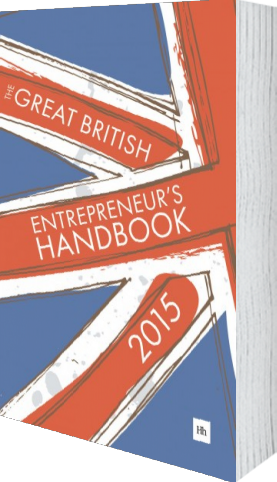
Delighted that I am a featured contributor in the brand new Great British Entrepreneur's Handbook 2015 - It is currently available as a print edition (£12.99) or on Kindle (free) from Amazon.

My chapter is entitled "The Changing Needs of Those in the Middle". It seems to have ruffled a few feathers!!! It starts:


The business development needs of small and large businesses seem to be catered for by coaches and big-ticket consultancies respectively. However, the market is failing to satisfy the needs of the directors of medium-sized businesses. 
This is a failure in terms of 
1) not giving clients what they really want and need, and 
2) missing opportunities to deliver consultancy that adds true value to the businesses of clients. 

What’s available to help the growing business is limited and inappropriate for the real needs of the client. Recent surveys and reports confirm that consulting firms and the business support industry as a whole are failing to deliver what growing entrepreneurial businesses really need...


Here is the blurb for the book:
The Great British Entrepreneur's Handbook 2015 shares the secrets of experienced entrepreneurs on everything from how to tell your business' story compellingly to the secrets of growing a business to the next level. With wit and wisdom, the personalities behind some of the leading firms and bestselling business books of today guide budding entrepreneurs through all the highs and lows of what it takes to be a business success.


Check out  the brand new Great British Entrepreneur's Handbook 2015 - It is currently available as a print edition (£12.99) on Kindle (free) from Amazon.

Monday, 10 November 2014

Simon Sinek: Start With Why


I implore that you watch the video above. Then the brief notes below will make sense.
According to Sinek, the fundamental difference between the "Apples" of the world and everyone else is that they start with "why." 
Sinek has developed what he calls the "Golden Circle," 
  1. Why - the core belief of the business. It's why the business exists.
  2. How - how the business fulfills that core belief.
  3. What - what the company does to fulfill that core belief.
Sinek found that most companies do their marketing backwards. They start with their "what" and then move to "how" they do it. 

See more at startwithwhy


Wednesday, 5 November 2014

Metro recognises our fave brands: Madecasse and Bighams

Always delighted to see our favourite brands in the news.

Yesterday we saw not one but two of our fave businesses side by side in the London Metro.


Well done to the Metro for recognising truly great independently-run businesses. Businesses that I am proud to be associated with.

Thursday, 9 October 2014

The Strategy Workout - Get What You Want... out of your business


Robert Craven introduces The Strategy Workout.


"Robert and his colleagues at The Directors' Centre work with ambitious directors of fast-growing businesses who feel that they could be doing even better. 
As a keynote speaker his style is challenging, honest and goading; free of business school hyperbole he makes his audience think. 

In this four minute clip Robert introduces the workshop 'Strategy Workout: Get More of What You Want from Your Business', in which you will create a 3 step, 3 year plan for you and your business that will get results.

"More importantly, the tools actually work to help create 'sustainable business growth'. Businesses are able to measure and deliver on their roadmap... accountability gets built into a simple but effective board room process."

The FT describes him as 'the entrepreneurship guru'. 

He is not full of theoretical rhetoric; he offers practical solutions - tangible business results. 

Robert's books Bright Marketing and Kick-Start Your Business are business best-sellers and have been acted upon by thousands of growing businesses. 

His latest book is Grow Your Service Firm."

www.robert-craven.com


Tuesday, 30 September 2014

Why consulting firms are failing medium-sized businesses


Here is the Executive Summary from this month's White Paper, 'Why consulting firms are failing medium-sized businesses'.

Executive Summary

A service delivery gap is reported consistently in consultancy practices.
  • 79% of consulting practices reported that they delivered an above-average customer experience
  • When asked, only 16% of the clients felt they received an above-average experience.
The reality is that consultancy practices are failing to deliver.
Between the synthetic siren calls of the gurus and the laden drones of certain academics lies a sweetspot that can really appeal to experienced business people.
What works for the entrepreneurial owner-directors of medium-sized businesses is something which does not have the dictatorial basis of either gurus, academics or management consultancies. Something that is more collaborative and participative. Something that is more respectful of their experience, expertise and achievements – and is more enduring.
What they want, what they lack, is a bigger picture that comes from focusing on Corporate Eudaimonia (‘human flourishing’), the best possible balance of financial, physical and moral well-being. Consequently, it has wider perspectives than pure maximisation of profit.
Experienced owner-directors don’t believe in miracles, or the efficacy of quick fixes. They think they have some – but not all – of the answers. They understandably don’t want to be preached to, nor have their experience and expertise ignored, or undervalued. They want heterarchy (a system of organisation where the elements are unranked) not hierarchy. They want to work peer-to-peer with mutual respect.
Owner-directors don’t believe that their business can be, or needs to be, transformed. They want improvement, not revolution, and they know that improvement is as much to do with how their business operates as anything related to direction or strategy.
They are looking for evolution: performance improvement over time, fitness in changing markets.


Tuesday, 23 September 2014

How to Win Business awards

Robert Craven shares his insights on making your awards application stand out from the crowd.
How to win business awards
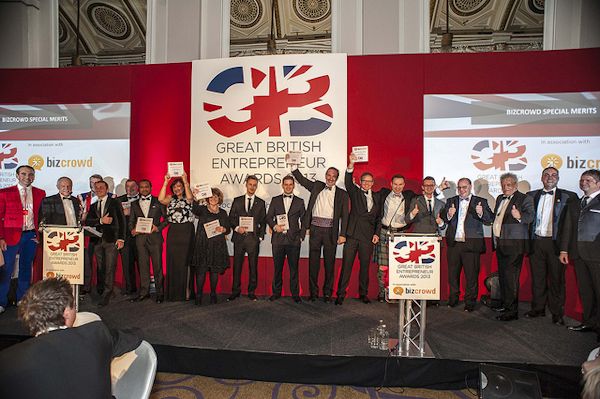
Over the past few years I have been a judge for numerous national business awards and competitions: Great British Entrepreneur, Start-ups, Growing Business, Fast Growth, Bio-Tech, working with the ‘good and the great’ to recognise and celebrate the achievements of individual businesses and their owners.
The process of judging is always a humbling affair; it involves a lot of highly-heated debate as well as a lot of laughter. The refining and narrowing down of a group choice to one winner is not as scientific as a one would like, but at the end of the day the best business wins. There is a lot of similarity between the way that job applications get handled and award applications get dealt with.
The sifting process...

How to win business awards
GBEA image

Read on at http://robert-craven.com/how-to-win-business-awards/

Thursday, 21 August 2014

Stop Blogging and Think

If you wish to prove that your new business is just a run-of-the-mill and unoriginal, vanilla-flavoured company like the rest, just keep on banging out those quickly-written and, to be honest, shallow blog posts.


Every so-called social media guru screams, ‘Content is King’. No! Content is not King; Engagement is King. If you put out even more mediocre, average and truly uninsightful blog posts then you will simply be adding to the mass of mediocrity that clutters our inboxes.


Do you truly believe that your audience can differentiate your unremarkable and unmemorable little blog offerings from anyone else’s? Do your “10 Tips...”, “What we can learn...”, and “How to…” –type titles really make potential clients think, “Yes, I want to buy from them!”? I doubt it. No, you just look like a breathlessly over-enthusiastic start-up. Why would they look at your sheer predictable averageness? More relevant, who does find those titles attractive? I doubt it will be the people you are trying to attract...


Friday, 8 August 2014

Owner-Directors Do Not Need Silver Bullet Advice

Owner-managers (the smaller, younger naive businesses) find it almost impossible to sort the good from the bad in the sea of offers of help. Their very naivety excludes them from knowing what they don’t know and what it actually is that they need. As a result, they tend to jump from one exciting initiative to the next.


On the other hand, owner-directors (in larger and more mature businesses) are not taken in by the breathless excitement of those selling hope to the needy. However, they find it hard to find the right assistance (being too big for the owner-manager offerings and too small for the offerings of the big consultancy houses).

 
As a starting point I would suggest that asking, ‘Where should the owner-director look for help and support?’ may actually be the wrong question.

 
The right question might be to ask ‘Exactly what is the problem and what are the underlying causes?’.

 
Unfortunately most suppliers of assistance do not carry out the appropriate diagnostic. Marketing consultants assume the problem is marketing, social media consultants assume the problem (and the solution) is social media and so on.

 
I would argue that what the business actually needs is an objective diagnostic, a look under the bonnet that examines what the key issues are and some sort of prioritised shopping list. The systematic approach is especially required for the owner-director.

 
Too often, the focus of interventions is on the business and the business goals and performance indicators. While it may be easier to measure and report on the easily measurable (the things that we can enter on to a spreadsheet), this rarely tells the whole story. The items that are tougher to measure are often left out of the equation. This is ironic as these are often the really important things.

 
The sort of questions I am referring to are less tangible but more about many owner-directors’ definition of success: Is this business fulfilling its purpose? Have we created a team and culture that is positive and self-reinforcing? Is this business sustainable in the long-run? Does it allow me to do what I really want to do with the rest of my life? Is it going to provide me with the funds I need (now and later)?

 
As we come out of the recession and as a little bit of pressure is coming off businesses so more and more owner-directors, managing directors and CEOs are starting to question the very fabric of their business and why they as individuals do what they do. There seem to be more and more people searching for answers, if only to validate that what they currently do is ticking all the right boxes.


Businesses are looking to create far more of a well-rounded solution recognising the need to create balance as well as a sustainable future. This requires an understanding of the bigger picture as well as its component parts: aspiring to develop a flourishing team, sales processes, cash-flow and profitability that deliver on the greater goals of the business. It seems that it is no longer just about the profit and the ROI but now there is a desire to create a more complete business that it is more satisfying and rewarding to own and run.

 
The owner-director may have been duped into parting with their own hard-earned cash in the past; the last thing they need right now is another guru with a magic wand. 


While a dramatic transformation, a radical revolution in how one does business may sound exciting (re-stimulating the passion and excitement of the old days), the wise owner-directors realise that what they probably need is a more delicate and evolutionary approach to growing and developing the business. The quest for explosive sales results is replaced with a desire to achieve sustainable growing profit.


The owner-director is very different from the smaller, owner-manager.


They have too much to lose (the nice car, home and holidays that come with painstakingly nurturing and growing a business) and they are no fools. What they are looking for is far-more considered support from people who have a mix of: been-there-done-it expertise, grey-haired wisdom, background credibility and the ability to communicate and assist. At this point in the business, one is looking for support in the long game, recognising the benefit of consistent and constant improvements (3% here and 4% there) that will create an engine for growth.